I’m an eclectic diviner and carry several kinds of tools in my spiritual arsenal for either a simple vibe check or getting deeper about an issue. Because of my extensive use of cards in divination, I’d like to introduce you to the various methods of cartomancy available.
I want to preface that the definition of the word “cartomancy” is used in different ways in the divining community. Cartomancy can refer to the practice of reading a fortune using cards in general, but generally it refers to using playing cards to perform a reading, something that will be discussed further down the page. If you’re looking to dive into another form of divination, just want to see what options are out there, or are new to reading cards, this is the perfect blog for you!
Oracle Cards
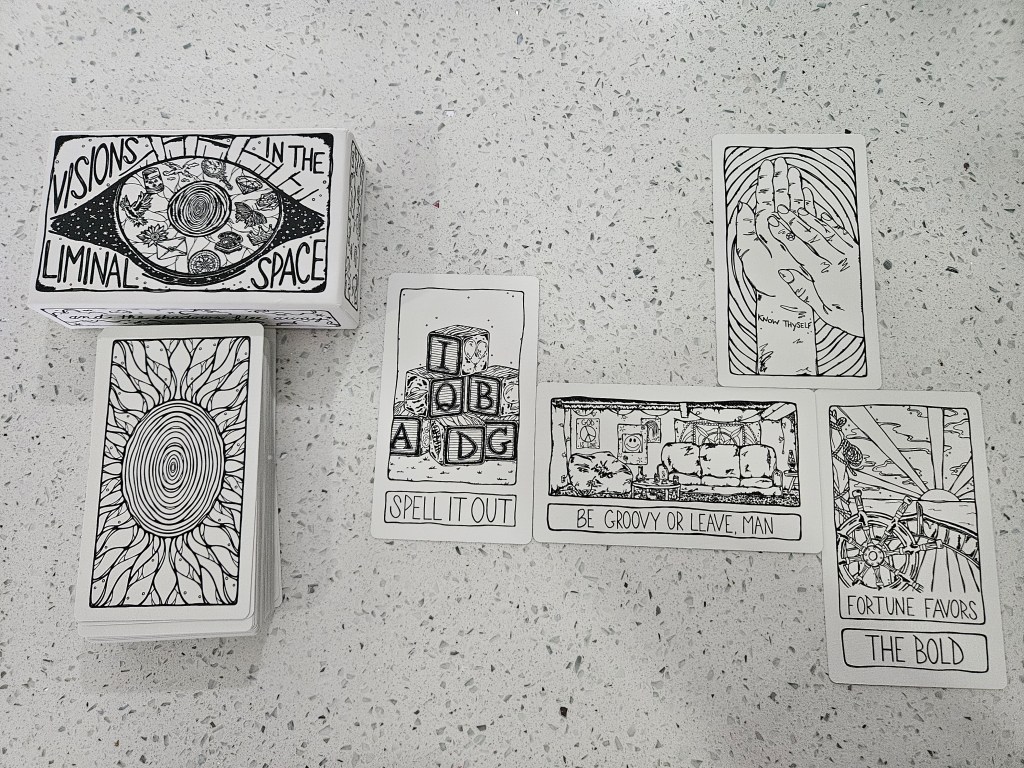
The second most common form of divination in shops right now I would believe are oracle cards. Oracle cards are for the freeform diviner. Those looking to break from the system of tarot (or other system-based divination tools) will see these a breath of fresh air. At times, oracle decks are “No little white book required (LWB for short),” with visuals and keywords easy enough to interpret meanings at a glance. Other times, artists will create their own original systems which offer a new intriguing way to view the world.
They’re probably the most versatile way to divine and can be used in numerous ways. Oracle decks are created with different aesthetics. Some are tough love and straightforward, some are soft, others are avant-garde and mysterious. Below you’ll see some examples of what I mean. Personally, I enjoy using oracle decks as significators when the spread allows. You can pull a card for affirmation to close out a reading or pull a card to clarify something for a current reading. The fun thing about oracle decks is that you have options and can be used a variety of ways.


Lenormand
Also known as “Le Petit Lenormand,” this 36-card system is a quick answer in predictive-style readings. A little history lesson: Lenormand was named after the French fortune-teller Marie Anne Le Normand. During her life in the 1800s, Le Normand claimed she divined for several notable people of France like Robespierre and Joséphine, the wife of Napoleon Bonaparte1. Sources about her tend to disagree about her tales, but her job as a diviner did not go unnoticed. In the 1840s, a few years after her death, her name was attached to a deck of cartomancy cards called Le grand jeu de Mlle. Lenormand published by Grimaud. As time went on, the deck evolved into the divination system we call the Lenormand today.
This divination system is perfect for practical, everyday matters. The cards of the deck function much like a fill-in-the-blank, where you ask a question and construct a sentence based on the spread to produce a response. The answer also changes based on card position and is typically read with two or more cards. Normally, you’ll find each card has a single image, the name of said image and the number of the card. This is very different from tarot where you get so much symbolism from a single card. Because of this simplicity, there’s minimum fuss about what you’re interpretation is going to be–what you see is usually what you get.
Lenormand has a more straight-forward style than tarot, but it’s also read metaphorically. For instance, the Bouquet (9) signifies pleasantness, generosity, socializing and etiquette. Animal cards can represent a person’s traits or situation e.g. the Fox (14) represents a cunning person or a job. Ultimately, I find this divination system to be charming and really easy to interpret.

Cartomancy or Reading Playing Cards
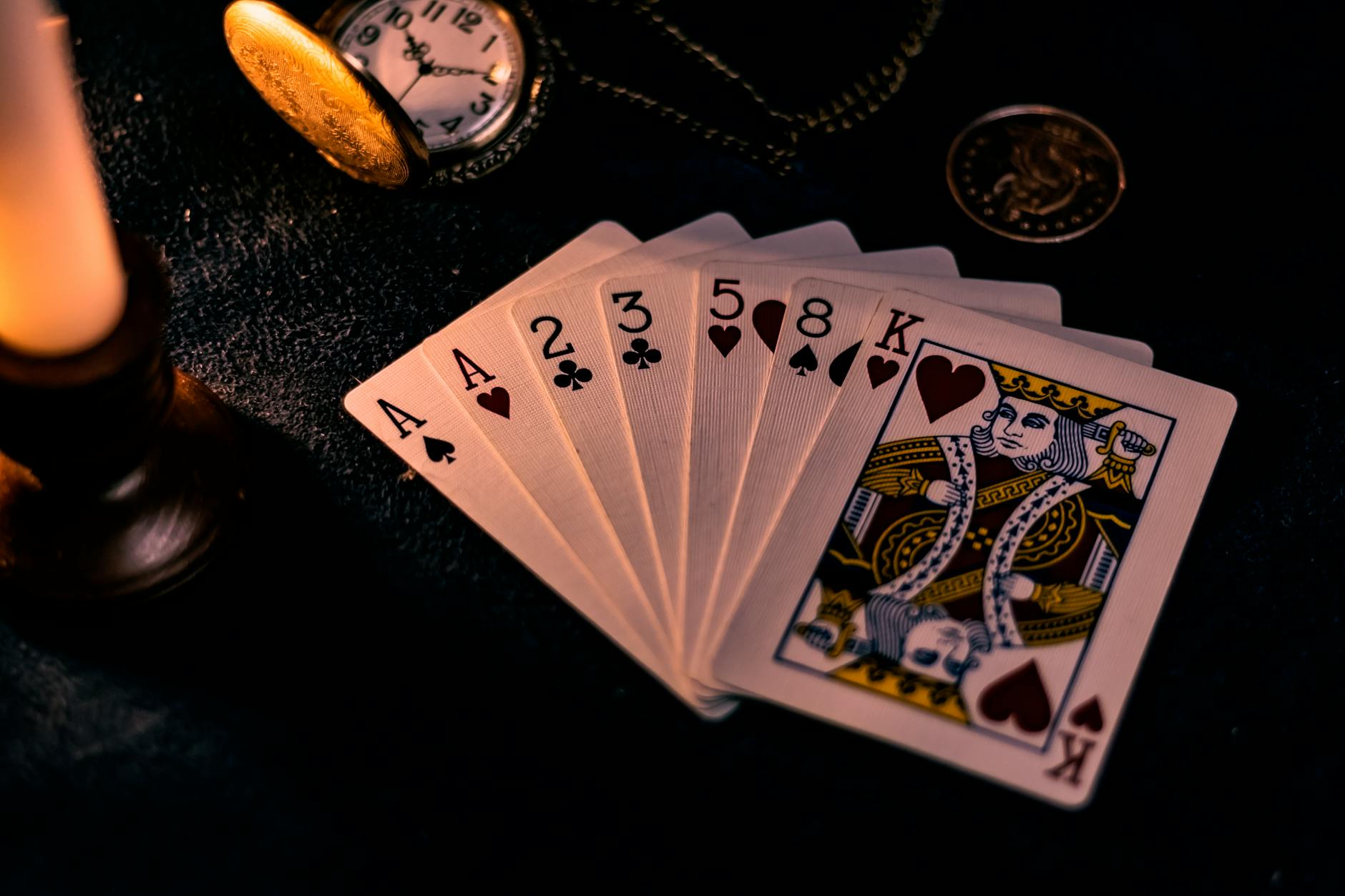
This form of divination invites you to use your normal 52-playing card deck to divine. Like tarot, playing cards are broken down into four suits: hearts, spades, diamonds, and clubs. Each suits carries it’s own meanings. The hearts are more obvious and often refer to relationships, love, and feelings. Spades are about hardships and delays, clubs are about action and inspiration, and diamonds are about money and work.
There are limited resources on how to perform cartomancy, and because there really is no defined system, so most readers come up with their own interpretations. Reading playing cards is very literal and the cards lack any sort of visual aid, thus interpretations tend to be simple. This is great if you prefer the least amount of distraction from your cards, while still getting a practical reading.
Kipper Cards
Kipper cards are almost like Lenormand’s distant German cousin. This is deck is composed of 36 cards and was popularized during 19th century Germany. Like Lenormand, it’s most likely that this divination system was inspired by a card game called “Game of Hope.”
However, unlike Lenormand, Kipper cards are meant to be read much more literally. This system mainly consists of relationships and roles that people play in life like Main Character, Thief, or False Person. The cards also contain major life events as well as everyday occurrences like Marriage, Work, and Illness. Because of its literal reading style and small selection of situations, Kipper is ideal for everyday when the querent wants the answer to a personal matter.

Tarot
Saving the best for last! Tarot (as you might know) is the most widely used system of divination. Known for its vibrant imagery and rich symbolism, it’s no wonder this deck has ridden the waves of time for so long. The 78-card deck is split into two arcanas, the Major and Minor Arcana. The Major Arcana is composed 22 cards meant to represent major events or moods, while the Minor Arcana has 56 cards that represent everyday life. The Minor Arcana is further divided into four suits: the Cups, the Wands, the Swords, and the Pentacles. Each suit has 14 cards and are split even further with 10 pip cards and 4 court cards.
This complex system is thought to be introduced in 15th century Italy where they were popularized as Tarocchi. It wasn’t until the 1800s that this card system evolved and was starting to be used for divination, most likely springing from Tarot de Marseille. Tarot comes in many forms, the most conventional being is the Rider-Waite Smith style. Illustrated by Pamela Colman Smith under A.E. Waite’s direction, the Rider-Waite Smith deck was published in 1910 and was the first of its kind to have illustrated pips. This was the beginning the world’s love affair with tarot.
The Rider-Waite Smith style is ubiquitous with artists around the globe using its template and making it their own. However, this isn’t the only style of tarot there is, with Tarot de Marseille and the Thoth tarot having their own crowd of fans. Some are loaded with esoteric imagery, some are simpler with unillustrated pip cards, other decks are meant to represent cultural identities.
When it comes to understanding the system, you could just study with a list of keywords, but the symbolism on most tarot decks can enrich your reading experience. Tarot has a long history with many occultists and occult groups through the decades, carrying symbolism from Christian, Kabbalistic and Astrology traditions just to name a few. There are also symbols in plain sight like, for example, the animal instincts shown by the roaring lion in the Strength (8) card being tamed by the woman through her inner confidence and will, showing that your inner strength is enough to tame compulsions.


That’s it, folks. This is my primer, my intro to cartomancy and all its kinds. There’s a whole world out there, and I’ve only scratched the surface. Heck, there might be even some card systems that I missed. If I have, I would love to know. Happy divining!
 Kismet Flame
Leave a comment